
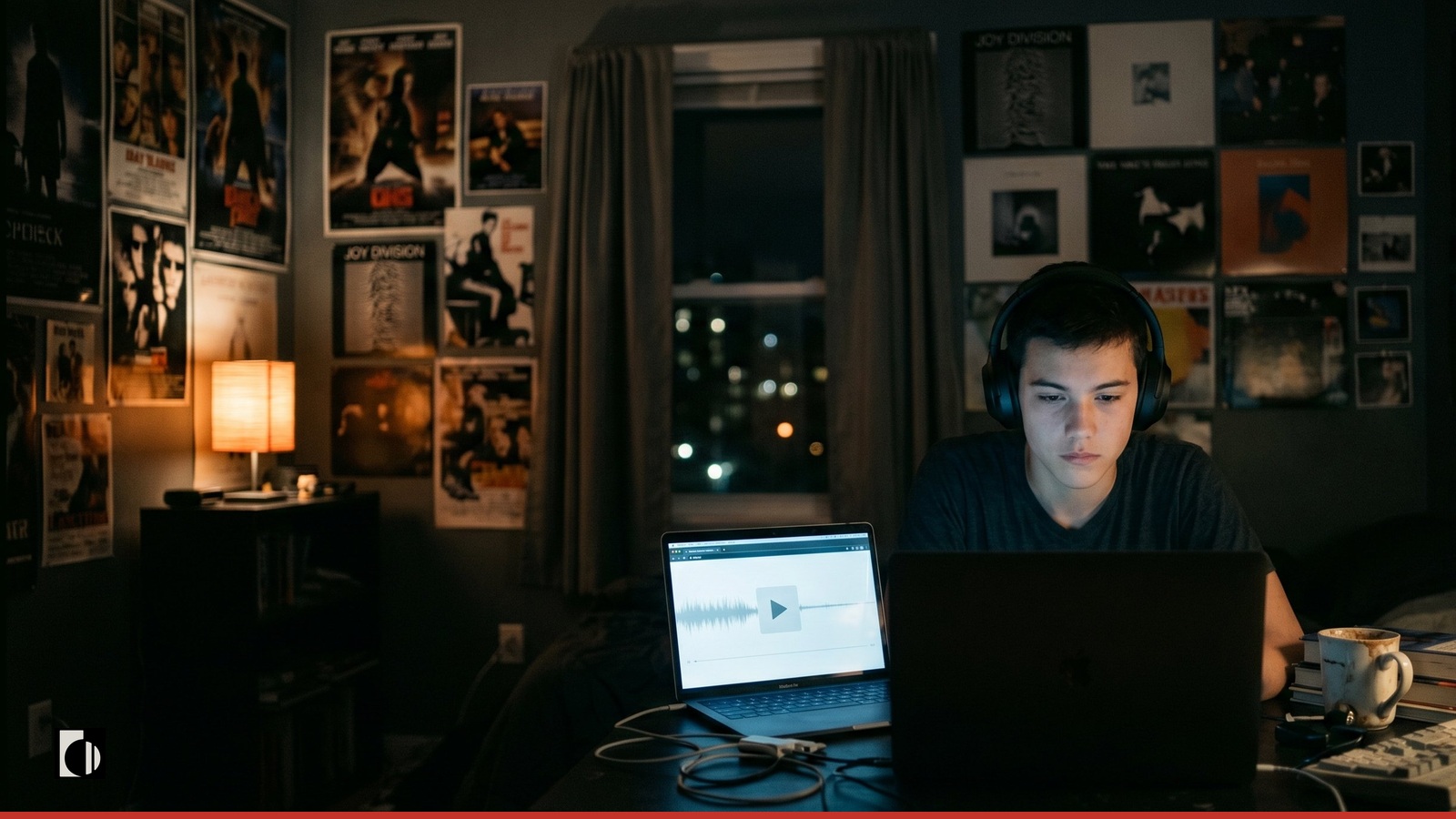
Why I’m paying scouts to keep doing the thing the algorithm can’t.
I’ve spent nineteen years trying to find artists before anyone else does. The thing I keep learning, every year, is that you need two completely different inputs to actually be early.
You need data. The volume of music coming out now is impossible to track without it. Stream velocity, follower spikes, UGC patterns, song-level signal on TikTok and Instagram. Without that layer, you’re guessing.
But data alone misses things. It always has. By the time the numbers move, dozens of people have already heard the song. The data is a trailing indicator of human attention. If you’re only watching the data, you’re already late.
So here’s what I’m actually excited about: a system that runs both.
AI working the back end. Agents serving us artists every day based on movement we’d never catch manually. A dashboard that shows the data the second it starts to shift. And next to all of it, a network of hungry kids in every corner of the world, sending us the artists they’re hearing before the data has anything to say.
That second part is what I built this week. We’re calling it the Scout Network.
What the algorithm can’t do.
For about fifteen years now, the first listener in music has been a recommendation engine. Spotify, TikTok, YouTube. They figured out that if you put a song in front of enough people, you can watch what they do, and what they do tells you everything.
This works. It works really well. It’s the reason there are more artists making money in music than at any other point in history.
But here’s what’s true even with all that infrastructure running:
The algorithm doesn’t have taste. It has math. It can tell you what’s working, but it can’t tell you why. It can find the song that’s spreading, but it can’t find the artist who’s about to spread three months from now if someone gives them a little push.
It also can’t make a call before there’s data to call on. By the time something is trending, it’s already trending. The job of finding artists before the numbers move has never been an algorithm job. It can’t be.
For that, you need people. Real ones. Listening on purpose.
Why this matters more now, not less.
This is the part where everyone wants me to talk about AI.
Fine. AI in music is a complicated subject and most of the takes on it are flat. What I’ll say is this: algorithmic discovery has been running for two decades. AI generation is the latest step in a long process. People are panicked about it now, but the conversation about whether machines should be running music discovery should have been happening since the playlists took over.
The practical effect of all of it, AI included, is that human curation matters more now, not less. The thing that used to be a nice-to-have is the only piece of the system that can’t be cheaply replicated. A real person who listens to a thousand songs a week and tells you which one is worth your time. A person in a corner of the culture you’re not in.
That person has always existed. They just stopped getting paid.
So I built something that pays them.
The deal.
You find an artist. You think we should be watching. You submit them with a sentence about why.
I personally review every submission. If it gets accepted onto the BTD dashboard, you get fifty dollars. Your handle gets stamped on that artist’s page, permanently, visible to every A&R rep and label and manager who logs into BTD.
No caps. No volume requirements. No "we’ll see if there’s budget."
Find ten artists we accept, that’s five hundred dollars. Find a hundred, that’s five grand. If one of those artists signs a major deal a year later, your handle is still on their dashboard page. You found them. We know it. They know it.
The way you make money here is by being right early. Not by being loud.
Who I’m looking for.
I want people who don’t work in the industry as much as I want people who do.
The industry has its own filter. A&R reps mostly hang out with other A&R reps. They go to the same showcases, follow the same managers, refresh the same charts. That’s not bad, that’s their job. But it means they’re listening from inside a feedback loop.
The scouts I’m looking for are outside the loop. A college radio kid. A bartender at a small venue. Someone who runs a niche blog or a Discord or a Spotify playlist with two thousand followers but the right two thousand. Someone whose taste is shaped by a corner of the culture the rest of us aren’t paying attention to.
You don’t need credentials. You need ears, attention, and a corner of the world nobody else is in.
A note on volume.
Some of you are reading this thinking: cool, I’ll submit a hundred artists a week and stack five grand.
It doesn’t work like that. I read every submission. If an artist is already big, they don’t qualify. If they’re not interesting, they don’t qualify. If you flood the pipe with SEO bait, I’ll stop reading your submissions.
Five real finds beat fifty bad ones, by a lot. The scouts who’ll do well here are the ones who are picky on the way in.
What you’re actually getting.
The fifty dollars matters. I’m not pretending it doesn’t.
But the actual thing you’re getting is rarer than that. You’re getting a public, permanent record that you heard this artist first. Right now, that record doesn’t exist anywhere in music. Scouts have always been invisible. The blog era ended, the playlist era doesn’t credit anyone, the algorithm doesn’t even know your name.
On BTD, your name stays on the artist. When a label opens that page, they see who flagged them first. When that artist signs, you discovered them. When they win a Grammy in 2031, you found them in 2026.
I can’t think of another job in music that gives you that.
Apply.
If this sounds like you, the application is at beforethedata.com/scouts/apply.
US, Canada, UK, Australia. Eighteen plus. That’s it.
I read every one personally.
Chad
Join the Scout Network.
Find artists before the market does. If your submission gets accepted onto the BTD dashboard, you get paid and your handle stays on the artist page.
Apply to scout →